
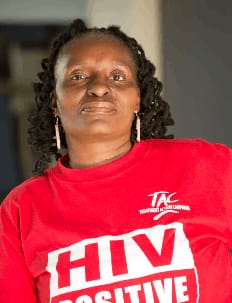
By Zodidi Mhlana
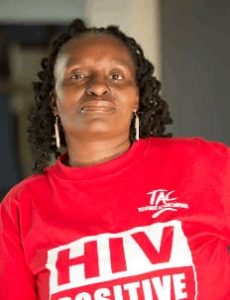
After a severe illness which led to an HIV diagnosis in 2000, Sibongile Tshabalala
never imagined she would live to see 2025.
Back then, an HIV/AIDS diagnosis signified death. Life saving anti retroviral treatment was expensive and out of reach for millions.
What was happening then to the 25-year-old Tshabalala in Johannesburg was all too common. Her story mirrored that of millions of young people across Southern Africa who had no access to life-saving treatment.
In 2000, Tshabalala was very sick. “I could not eat. My dad just took me like a baby. He was carrying me like a baby to the doctor and said to the doctor, if you’re unable to treat my child, please refer my child to someone because I’ve been coming here and you’ve been giving her medicines, but she’s not getting better,” Tshabalala noted.
The lack of access to life-saving treatment was devastating. She had to watch some of her closest young relatives and peers succumb to the disease
“Some of them were actually, passing away. And like almost every, every now and again, we were burying people. I remember around that time, I lost three of my cousins in a very short space of time,” she noted.
By 2006, when she finally started antiretroviral treatment, HIV had ravaged millions of people in South Africa, leading to a decline of life expectancy down to 50. At the time,
living beyond those years seemed unimaginable. “So it was not easy to live at those times, and no one knew that by 2025 I will be still alive. And I think many of us who were diagnosed around those times, we never thought that we will live this long,” she said.
The grim decline in life expectancy was not limited to South Africa. It was a reality across the entire region. According to the
Southern African Development Community (SADC), the average life expectancy in SADC between 2000 and 2009 was just 52.8 years.
Much of the life expectancy decline was attributed to the HIV pandemic which infected millions of people across region. The lack of access to life saving drugs led to deaths. But, the roll out of the antiretroviral therapy across many countries in mid 2000’s began reversing the trend, offering hope to millions like Tshabalala.
It was that hope that emboldened Tshabalala to take a leading role in the fight against HIV, joining the Treatment Action Campaign, where she serves as its national chairperson today.
*UNAIDS highlights SADC’s progress*
The UNAIDS Director for the Regional Support Team for Eastern and Southern Africa, Anne Githuku-Shongwe, noted the impressive progress the Southern African region has made since the early days of the epidemic.
The exorbitant cost of antiretroviral therapy at the height of the epidemic made it impossible for many governments, particularly in Africa, to provide treatment for their citizens. “They were $25,000, so it was not available per person. They brought the price down to $70 per person, and that’s what made it accessible to people,” she noted.
She highlighted how the continent lost 12 million people who “could have survived if ARVs were offered to them when ARVs existed in the world.” “So, UNAID sets global targets for what it would take to end AIDS as a public health care. We test, we have three targets, we call them 95-95-95 targets. 95% of all people living with HIV test for HIV. They go on treatment and they adhere to the treatment so that it is suppressed. That way they don’t pass on HIV. In the SADC region,” Githuku-Shongwe said.
She remarked on the strides the region was making in achieving the targets. “The countries in the world, the countries that have achieved the greatest success in reaching these targets are mostly in Southern Africa, Zimbabwe, Botswana, Malawi. Zambia is quite close, South Africa is quite close, Mozambique is quite close. Now I say quite close because remember South Africa has 8 million people living with HIV. So when we talk about compared to say a Swatini who has 200,000 people. So for South Africa as they work on reaching the 8 million, they still have about 1.1 million people who are not on treatment but they have made exceptional progress because the rest are on treatment and are testing and so on. And where you therefore have people on treatment And adhering, it increases their life expectancy,” she said.
When asked what should be done to ensure that the progress made was not disrupted by the HIV/AIDS funding cuts announced by the US government in early 2025, she said there were concerns.
“We were disrupted,” she said, explaining that they had anticipated funding would begin to dwindle within five years, with the aim of encouraging countries to increase domestic investment in their fight against the virus and reduce dependence on donors. “A country like Tanzania, which was 90% dependent on the US government for its aid response, has now announced a health levy. Three percent of tax revenue will go into universal health coverage, with 70% allocated to HIV treatment,” Githuku-Shongwe stated.
From averaging in the 50s in the early 2000s, the majority of nations in the Southern African region now have life expectancy above 64–65 years.
National Health Minister Dr. Aaron Motsoaledi described this as a “major victory,” particularly for South Africa, which has the highest number of people living with HIV at eight million and the largest antiretroviral treatment programme, serving over six million. Motsoaledi said in an interview that one of the AIDS researchers compared the improvements in life expectancy to the period when slavery was abolished in the 19th century. “The effects of it were like the abolishment of slavery. That’s how impactful it was,” the minister noted. “We did score a huge victory. We reduced martenal mortality, it was very high. We were losing women at a high rate,” he added. E